
Introduction
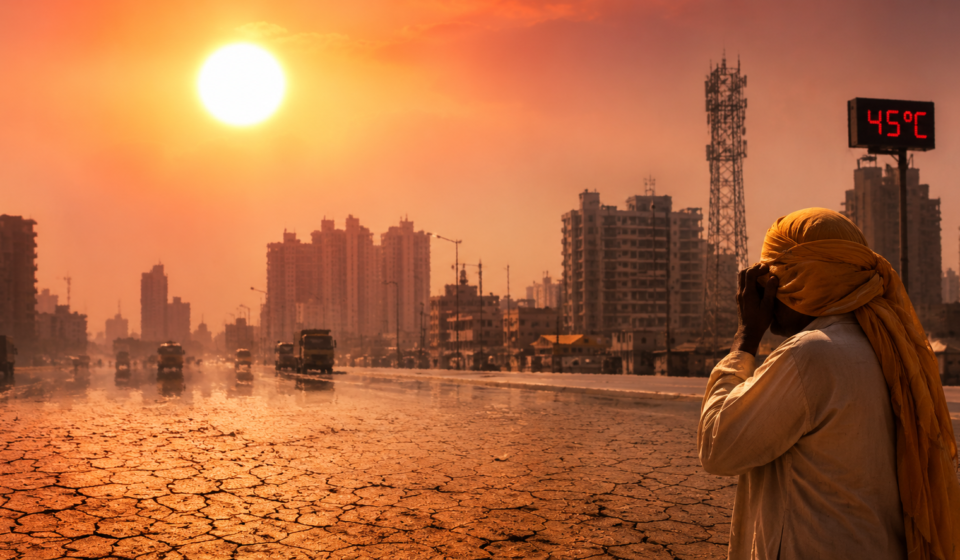
India just lived through a summer that meteorologists will be studying for years. In 2026, every single one of the world’s 50 hottest cities was located in India, with mercury crossing 47°C in parts of Maharashtra and nighttime temperatures refusing to drop below 30°C across dozens of towns. This isn’t an isolated bad season — it’s the third consecutive brutal summer, following record-breaking heat in 2024 and 2025, and scientists say it marks a genuine climate tipping point. As power grids strain, hospitals report heatstroke surges, and farmers watch crop yields shrink, the 2026 heatwave has turned from a seasonal headline into one of the most urgent climate and economic stories in India today.
How Hot Did It Get?
The numbers from this year are staggering. A global weather-tracking platform recorded that all 50 of the planet’s hottest cities on a single day in 2026 were Indian, with an average maximum temperature of 42.6°C among them. Brahmapuri in Maharashtra’s Vidarbha region recorded the country’s peak temperature at 47.2°C, while Banda in Uttar Pradesh hit 46.4°C. At least 19 Indian cities crossed the 45°C mark, spanning Uttar Pradesh, Haryana, Chhattisgarh, and Telangana. Perhaps more alarming than the daytime highs was the lack of nighttime relief — nearly 35 cities recorded overnight temperatures around or above 30°C, a pattern meteorologists link directly to urban heat-island effects and rising humidity.
The India Meteorological Department (IMD) issued severe-to-very-severe heatwave warnings across Delhi, Rajasthan, Punjab, Haryana, Uttar Pradesh, Madhya Pradesh, Vidarbha, Chhattisgarh, Bihar, and Telangana, with Delhi alone expected to touch 44–45°C on multiple days. In a striking contrast, southern states like Kerala and Karnataka began receiving early monsoon showers even as the north baked — illustrating how unevenly climate stress is now playing out across the subcontinent. Adding to the unusual pattern, India recorded its first-ever winter heatwave in February 2025 in Goa and Maharashtra, an event the IMD itself called unprecedented in recorded history.
Why Is 2026 So Hot?
Experts point to a combination of factors converging at once. Long-term global warming is steadily raising baseline temperatures, making heatwaves more frequent, more intense, and longer-lasting. Below-normal pre-monsoon rainfall across north and central India left land surfaces drier and quicker to heat up. Rapid urbanisation — dense concrete construction, shrinking green cover, and rising vehicle emissions — is trapping heat in cities and pushing up nighttime temperatures. Some climate researchers have also flagged the possibility of a strong El Niño pattern, which could push 2026 toward becoming one of the hottest years on record globally.
The Human and Economic Toll
Behind the temperature charts is a mounting human cost. A study analysing roughly 3.6 million deaths found that heatwave days were linked to a 14.7% rise in daily mortality compared to non-heatwave days. In 2024 alone, India recorded over 40,000 heatstroke cases and 110 confirmed heat-related deaths, though experts widely believe this undercounts the real toll due to inconsistent reporting between the IMD, health ministry, and local authorities. Research shows 57% of Indian districts, home to roughly 76% of the population, now face “high to very high” heat risk.
The economic damage is just as severe. According to the Lancet Countdown’s 2025 report, heat exposure cost India 247 billion potential labour hours in 2024 alone — a 124% jump from 1990s levels. The International Labour Organisation estimates India could lose 5.8% of its working hours by 2030 due to heat stress, equivalent to roughly 34 million full-time jobs, with economists warning that heat-linked productivity losses could put up to 4.5–7% of India’s GDP at risk. Around 380 million Indians work in heat-exposed sectors — construction, delivery, street vending, and farming — where there is little to no access to cooling.
The strain extends to infrastructure too. India’s power grid hit an all-time peak demand of 270.82 GW on May 21, 2026, smashing the previous record of around 250 GW set in May 2024, as millions of households and businesses cranked up cooling systems simultaneously.
How India Is Responding
Cities and states are scrambling to adapt. Ahmedabad pioneered India’s first Heat Action Plan (HAP) over a decade ago, and the model has since spread nationwide — Delhi now issues graded heat alerts, Rajasthan has set up cooling stations for informal workers, and Tamil Nadu has officially declared heatwaves a state-specific disaster, unlocking disaster relief funds for response. Yet experts caution that implementation gaps remain wide, particularly in protecting informal workers who have no legal safeguards against wage loss during extreme heat alerts.
Conclusion
India’s 2026 heatwave isn’t just a weather event — it’s a preview of the climate reality the country will increasingly have to plan around. With temperature records falling year after year, power grids stretched to their limits, and millions of vulnerable workers bearing the brunt of lost wages and health risks, the conversation is shifting from short-term emergency response to long-term structural adaptation. How India builds heat-resilient cities, protects informal labour, and closes the gap between policy and ground-level implementation will shape not just public health outcomes, but the country’s economic trajectory through the rest of this decade.
Frequently Asked Questions (FAQs)
Why is India experiencing such extreme heatwaves in 2026? A combination of long-term climate change, below-normal pre-monsoon rainfall, rapid urbanisation, and a possible strong El Niño pattern is pushing temperatures to record highs across northern and central India.
Which Indian cities recorded the highest temperatures in 2026? Brahmapuri in Maharashtra recorded the country’s highest temperature at 47.2°C, followed by Banda in Uttar Pradesh at 46.4°C, with at least 19 cities crossing 45°C.
How is the heatwave affecting India’s economy? Heat-related productivity losses could put up to 4.5–7% of India’s GDP at risk by 2030, with the ILO estimating a potential loss of 34 million full-time jobs due to reduced working hours.
What is a Heat Action Plan (HAP)? A Heat Action Plan is a city or state-level policy framework — pioneered by Ahmedabad — that uses early warnings, public awareness campaigns, and emergency protocols to reduce heat-related illness and deaths.
Is climate change making Indian heatwaves worse? Yes. Scientists widely attribute the rising frequency, intensity, and duration of Indian heatwaves to long-term global warming, compounded by urban heat-island effects and declining green cover.