Skip to content
-
  • https://www.facebook.com/
  • https://twitter.com/
  • https://t.me/
  • https://www.instagram.com/
  • https://youtube.com/
Web Digital PR Logo Web Digital PR Logo Web Digital PR

Verified News. Real Impact.

Web Digital PR Logo Web Digital PR Logo Web Digital PR

Verified News. Real Impact.

  • News
        • Latest News
        • Breaking News
        • Trending
        • Editor's Picks
        • ── By Category ──
        • Business
        • Technology
        • Startups
        • Digital Marketing
        • AI & Innovation
        • Finance
        • ── Features ──
        • Interviews
        • Announcements
  • Industries
        • SaaS
        • eCommerce
        • Healthcare
        • Finance & FinTech
        • Travel & Hospitality
        • Real Estate
        • Education
        • Manufacturing
        • Media & Entertainment
  • Press Releases
        • All Press Releases
        • Latest Releases
        • Featured Releases
        • By Industry
        • Submit a Press Release
        • PR Guidelines
        • Editorial Policy
  • Insights
        • Expert Opinions
        • Industry Reports
        • Market Trends
        • SEO & Marketing
        • AI in Business
  • About Us
        • About Us
        • Get in Touch
        • Advertise
  • News
        • Latest News
        • Breaking News
        • Trending
        • Editor's Picks
        • ── By Category ──
        • Business
        • Technology
        • Startups
        • Digital Marketing
        • AI & Innovation
        • Finance
        • ── Features ──
        • Interviews
        • Announcements
  • Industries
        • SaaS
        • eCommerce
        • Healthcare
        • Finance & FinTech
        • Travel & Hospitality
        • Real Estate
        • Education
        • Manufacturing
        • Media & Entertainment
  • Press Releases
        • All Press Releases
        • Latest Releases
        • Featured Releases
        • By Industry
        • Submit a Press Release
        • PR Guidelines
        • Editorial Policy
  • Insights
        • Expert Opinions
        • Industry Reports
        • Market Trends
        • SEO & Marketing
        • AI in Business
  • About Us
        • About Us
        • Get in Touch
        • Advertise
Close

Search

Submit PR
Web Digital PR Logo Web Digital PR Logo Web Digital PR

Verified News. Real Impact.

Web Digital PR Logo Web Digital PR Logo Web Digital PR

Verified News. Real Impact.

  • News
        • Latest News
        • Breaking News
        • Trending
        • Editor's Picks
        • ── By Category ──
        • Business
        • Technology
        • Startups
        • Digital Marketing
        • AI & Innovation
        • Finance
        • ── Features ──
        • Interviews
        • Announcements
  • Industries
        • SaaS
        • eCommerce
        • Healthcare
        • Finance & FinTech
        • Travel & Hospitality
        • Real Estate
        • Education
        • Manufacturing
        • Media & Entertainment
  • Press Releases
        • All Press Releases
        • Latest Releases
        • Featured Releases
        • By Industry
        • Submit a Press Release
        • PR Guidelines
        • Editorial Policy
  • Insights
        • Expert Opinions
        • Industry Reports
        • Market Trends
        • SEO & Marketing
        • AI in Business
  • About Us
        • About Us
        • Get in Touch
        • Advertise
  • News
        • Latest News
        • Breaking News
        • Trending
        • Editor's Picks
        • ── By Category ──
        • Business
        • Technology
        • Startups
        • Digital Marketing
        • AI & Innovation
        • Finance
        • ── Features ──
        • Interviews
        • Announcements
  • Industries
        • SaaS
        • eCommerce
        • Healthcare
        • Finance & FinTech
        • Travel & Hospitality
        • Real Estate
        • Education
        • Manufacturing
        • Media & Entertainment
  • Press Releases
        • All Press Releases
        • Latest Releases
        • Featured Releases
        • By Industry
        • Submit a Press Release
        • PR Guidelines
        • Editorial Policy
  • Insights
        • Expert Opinions
        • Industry Reports
        • Market Trends
        • SEO & Marketing
        • AI in Business
  • About Us
        • About Us
        • Get in Touch
        • Advertise
Close

Search

Submit PR
Home/Industry Reports/Will EVs Really Outnumber Petrol Cars? Here’s What the 2026–2047 Data Actually Says
EV vs petrol cars, global EV sales 2026, electric vehicles future, EV adoption timeline, petrol car phase out, BloombergNEF EV outlook, China EV market, India EV market, US EV policy, electric car sales record, battery cost decline, EV charging infrastructure, road transport fuel demand, ICE vehicle ban, clean transport 2026
Industry ReportsTravel & HospitalityTrending

Will EVs Really Outnumber Petrol Cars? Here’s What the 2026–2047 Data Actually Says

By Nick A
June 29, 2026 5 Min Read

Introduction

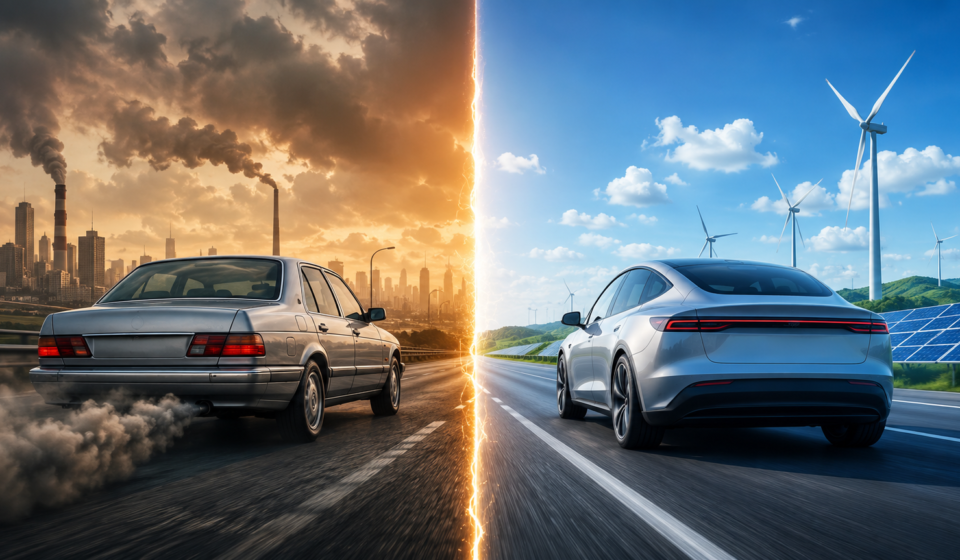
Every week, a new headline declares the age of the petrol car is over. And the numbers certainly look dramatic: over 23 million electric vehicles are expected to be sold globally in 2026, representing more than one in four new cars purchased worldwide. But zoom out from the showroom floor to the actual roads, and a very different picture emerges. There are still well over a billion combustion-engine cars on the planet, and they are not going anywhere fast. So, when will EVs actually outnumber petrol cars? The honest, data-backed answer might surprise you — and it reveals as much about the complexity of the energy transition as it does about the future of the automobile.

The 2026 Snapshot: Record Sales, But Uneven Growth

The headline number for 2026 is striking. BloombergNEF’s Electric Vehicle Outlook projects over 23 million passenger EVs to be sold globally this year — an 11% jump from 2025 — with electric vehicles accounting for 27% of all car sales worldwide, up sharply from just 9% five years ago. The IEA’s Global EV Outlook 2026 confirms the momentum: global electric car sales grew by more than 20% in 2025 alone, hitting 21 million units, with one in four new cars sold being electric.

But the growth is strikingly uneven. China remains the dominant force, accounting for 63% of all EVs sold globally in 2025, with electric cars capturing more than half of all annual domestic car sales for the first time. Europe is accelerating, with EV sales rising more than 30% in 2025 to reach 28% of total car sales, and projections pointing to one in three new cars being electric in 2026. Norway has pushed battery electric cars to a remarkable 96% share of all car sales — essentially completing its transition.

Then there is the United States, where the story abruptly reverses. US electric car sales actually declined by 2% in 2025, largely due to the removal of federal EV tax credits. Before that policy rollback, American EV sales had hit an all-time quarterly high, illustrating just how sensitive adoption curves are to government support. India, meanwhile, recorded a 75% surge in electric car sales in 2025, with total EV sales across all segments reaching 2.3 million — a new national record driven by two- and three-wheelers alongside a growing passenger car segment.

The Road Fleet Problem: Why Sales Are Only Half the Story

Here is the number that resets expectations: even with record sales every year, BloombergNEF does not project electric passenger vehicles on the road to outnumber ICE vehicles until 2047. That is more than two decades away from today.

The reason is simple arithmetic. Globally, there are well over a billion petrol and diesel cars currently in use. They have an average lifespan of 15 to 20 years. Even if every single new car sold from today were electric — which is nowhere near happening — it would take the better part of two decades for the existing ICE fleet to retire. In practice, the transition is gradual: by 2040, BloombergNEF projects over 80% of total truck fleets, 52% of vans, and 48% of two-wheelers will still be combustion-engine vehicles. Even the most electrified segments of the market will not fully complete the shift by then.

This does not mean the transition is failing. It means it is operating on the timescale of a genuine infrastructure replacement cycle — which historically takes decades, not years.

What Accelerates and What Slows the Shift

Several forces are pushing electrification faster than past projections suggested. Battery costs continue to decline, bringing EV sticker prices progressively closer to ICE equivalents. In oil-price-sensitive emerging markets, fuel savings are becoming a powerful driver: based on average oil prices in April 2026, annual fuel cost savings for EU drivers switching to an EV grew 35% compared to 2025 savings. Road transport fuel demand is projected to peak globally in 2029 — the first time in history that oil consumption in transport will begin a structural decline.

On the other side, the factors slowing the shift are real. Charging infrastructure, while expanding rapidly — ultra-fast charging connectors in Europe and the US grew nearly 50% in 2025 — still falls short in rural areas and developing markets. Policy volatility, as seen in the US, can pause momentum almost overnight. And the global grid will require over $800 billion of investment to incorporate EVs at scale by 2040, without which mass EV adoption risks simply shifting emissions from tailpipes to power stations.

Conclusion

The data tells a story of genuine, irreversible momentum — and sobering scale. EVs are winning the new-car market faster than most forecasters predicted just five years ago. By 2035, BloombergNEF projects 52% of all new passenger vehicle sales globally will be electric. Yet the real-world fleet turnover that will make roads, air quality, and climate outcomes meaningfully better is a longer game, one that plays out through the 2030s and 2040s. The petrol car is not dead in 2026 — but it has received its diagnosis. The question is no longer if electric vehicles will dominate, but how fast the world is willing to move to get there.

Frequently Asked Questions

When will EVs outnumber petrol cars on the road?

According to BloombergNEF’s Electric Vehicle Outlook 2026, electric passenger vehicles on the road will not outnumber ICE vehicles until approximately 2047, even as EV sales continue to break records annually.

How many EVs will be sold globally in 2026?

BloombergNEF projects over 23 million passenger EVs to be sold globally in 2026, representing 27% of all car sales worldwide.

Which country leads the world in EV adoption?

China leads global EV adoption, accounting for 63% of all electric cars sold globally in 2025, with EVs making up more than half of all domestic car sales.

Is India’s EV market growing?

Yes. India recorded 2.3 million EV sales in 2025 — a new national record — with electric car sales growing over 75% year-on-year, driven by two- and three-wheelers and rising passenger car adoption.

What will happen to petrol car demand?

Global road transport fuel demand is projected to peak in 2029, after which a structural decline is expected as EV adoption rises, battery costs fall, and more countries tighten ICE regulations.


Tags:

BloombergNEF electric vehicle outlook 2026China EV dominance 2026electric car future predictionselectric vehicle vs petrol car futureEV adoption timeline 2035 2047EV market share worldwideEV vs ICE cars dataglobal EV sales 2026how many EVs sold 2026India EV sales recordpetrol car phase out dateUS EV market slowdownwhen will EVs replace petrol carswill EVs outnumber petrol cars
Author

Nick A

Follow Me
Other Articles
India heatwave 2026, climate change India 2026, IMD heatwave alert today, hottest cities in the world India, Delhi temperature today, heatwave deaths India, heat action plan India, extreme heat economic impact India, India power demand record 2026, why is India so hot 2026, climate change effects India, heatwave health risks India, global warming India news, El Nino India 2026, India GDP heat loss
Previous

El Niño Meets Climate Change: Inside India’s Record-Breaking 2026 Heatwave

BESS India, battery energy storage India, green energy India, India renewable energy 2026, solar storage India, grid-scale battery storage, India power sector, energy transition India, CEA battery regulations, SECI tenders, sodium ion battery India, clean energy India, India 500 GW target, battery storage boom India, peak power demand India
Next

India’s Battery Storage Revolution: How BESS Is Becoming the Missing Link in the Green Energy Grid

No Comment! Be the first one.

Leave a Reply Cancel reply

Your email address will not be published. Required fields are marked *

Recent Posts

  • Wearable Tech to AI Coaches: How Technology Is Completely Changing the Way We Fitness in 2026
  • Ozempic Changed Weight Loss — Now Fitness Experts Are Rethinking Everything About Exercise
  • India’s Battery Storage Revolution: How BESS Is Becoming the Missing Link in the Green Energy Grid
  • Will EVs Really Outnumber Petrol Cars? Here’s What the 2026–2047 Data Actually Says
  • El Niño Meets Climate Change: Inside India’s Record-Breaking 2026 Heatwave

Archives

  • July 2026
  • June 2026
  • May 2026

Categories

  • AI & Innovation
  • Breaking News
  • Business
  • Digital Marketing
  • Finance
  • Health & Fitness
  • Industry Reports
  • Latest News
  • Startups
  • Technology
  • Travel & Hospitality
  • Trending
  • Uncategorized

Company

  • About Us
  • Get in Touch
  • Advertise

Content

  • Latest News
  • Industries
  • Insights

Press Release

  • Submit Press Release
  • PR Guidelines
  • Editorial Policy

Legal

  • Privacy Policy
  • Terms of Use
  • Sitemap
Copyright 2026 — Web Digital PR. All rights reserved.